Age Verification Required
Research Purposes Only
This website contains information about research peptides intended strictly for laboratory and scientific research. You must be 18 years or older to enter.
By entering you confirm you are 18+ and agree that all products are for research use only. Not for human consumption.
GHK-Cu
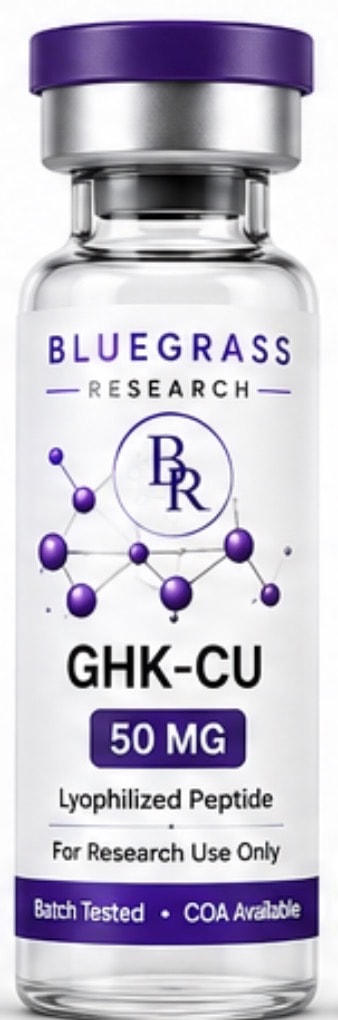
Copper Peptide GHK-Cu
GHK-Cu is a naturally occurring copper-binding tripeptide found in human plasma. Studied for its role in wound healing, collagen synthesis, antioxidant activity, and gene expression modulation in skin biology research.
Research Overview
GHK-Cu (Glycyl-L-histidyl-L-lysine copper complex) is a naturally occurring tripeptide that was first isolated from human plasma albumin. It has a high affinity for copper(II) ions and forms a stable complex that is biologically active. Research has extensively studied its role in stimulating collagen, elastin, and glycosaminoglycan synthesis in fibroblast cultures, its antioxidant and anti-inflammatory properties, and its ability to modulate gene expression — reportedly influencing over 4,000 genes in various studies. GHK-Cu is a widely used research tool in dermatology, wound healing biology, and regenerative medicine research.
Research Highlights
Related Compounds
View AllBPC-157
Body Protection Compound-157
BPC-157 is a pentadecapeptide composed of 15 amino acids. It is a partial sequence of body protection compound (BPC) that is discovered in and isolated from human gastric juice. Extensively studied in vitro for its role in cellular repair and tissue regeneration pathways.
TB-500
Thymosin Beta-4 Fragment
TB-500 is a synthetic peptide analog of the naturally occurring thymosin beta-4 protein. Studied for its role in actin regulation, cellular migration, and angiogenesis research applications in laboratory settings.
ARA-290
Non-Hematopoietic EPO Analog
ARA-290 (Cibinetide) is a non-hematopoietic erythropoietin analog that selectively activates the innate repair receptor (IRR). Studied for its tissue-protective and anti-inflammatory properties in cellular and neuroprotection research.
For Research Purposes Only · Not intended for human consumption